
About the artist:
Leo Crane explores creativity and innovation through a practice that combines traditional artistic techniques with experimental digital technologies. His work spans moving image, figurative fine art, and groundbreaking projects such as the world’s first live opera on the blockchain. His work has been exhibited, screened, published, and performed internationally, from London’s Southbank Centre and the Grand Palais in Paris to galleries in Hong Kong, Seoul, and California. He is currently directing and producing the animated film The Masterpiece of Tamagata at Figuration, his London-based production studio.
Alongside his creative practice, Leo is co-founder of AIFA Ventures, International Advisor to the OmenaArt Foundation, and a board member of Animate Projects, Pangaea Sculptors’ Centre, and Art Voyage Biennial. He speaks internationally on creativity, technology, and leadership, and serves on the faculty of professional education programmes including Sotheby’s Institute of Art and the V&A Academy.
Leo holds an MA (Distinction) in Computer Animation from Bournemouth University and an MA (Hons) in Classics from the University of Oxford. He studied painting with Maggi Hambling CBE and is the author of Contemporary Figures in Watercolour (Batsford Books, 2021).
The Interview:
Written by Paloma Rodriguez
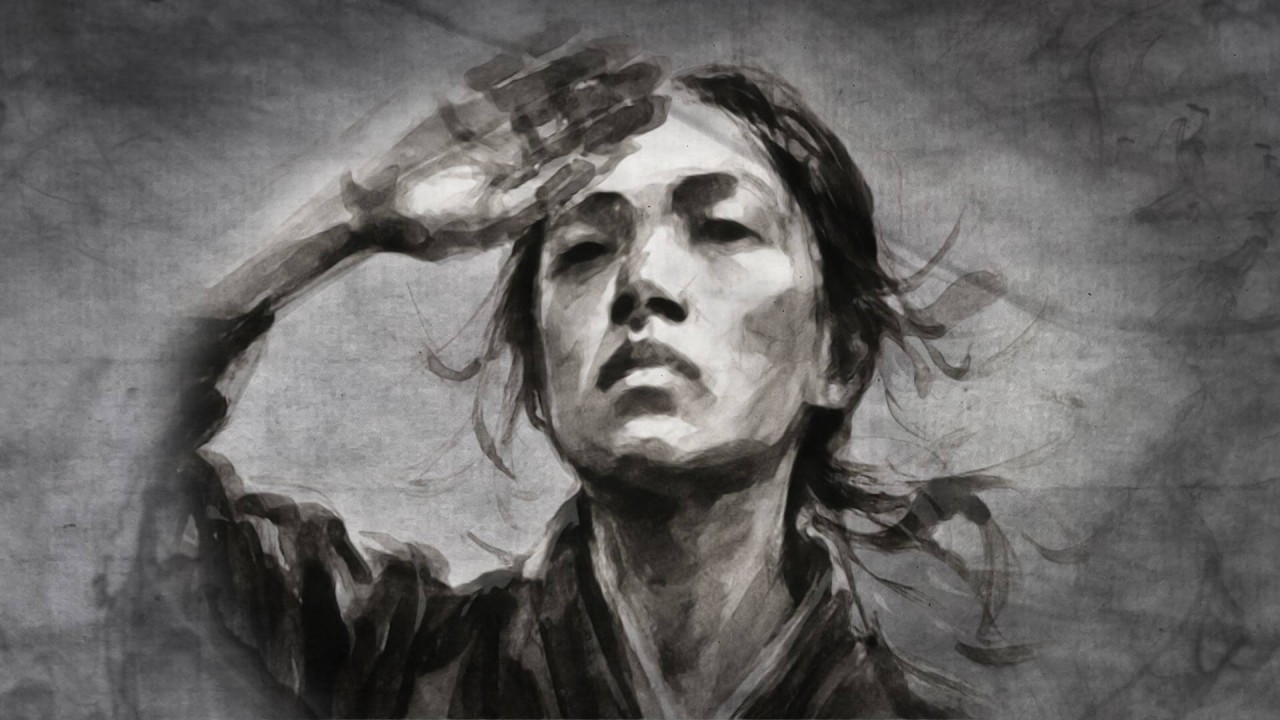
The Masterpiece of Tamagata
Paloma: Looking back, how did your artistic practice first take shape, and how did it relate to your early interests in teaching, theory, or disciplinary frameworks?
Leo:
I learnt early on that art is power. Apparently, I was conceived after a particularly powerful creative workshop in an asylum in the Polish mountains. Back in the UK, I grew up in the theatre, specifically the box office and bar, which doubled as convenient childcare whilst my parents rehearsed their latest productions. I was surrounded by talk of radical artists like Tadeusz Kantor, Pina Bausch or Aubrey Williams. These people were rebuilding the world, making sense of it, making people feel that another kind of future was actually possible.
I learnt that art is investigation, whether through performance, painting, or a late-night philosophical debate. My artistic practice must have evolved from that: a compulsion to dive deep into an idea and, along the way, find a process (preferably collaborative) that allows the idea to emerge and shape the world around us. Research and teaching are as essential to this kind of investigation as picking up a paint brush.
This may also explain my longstanding fascination with technology, particularly emerging technology. The profound impact it has on our lives, most of it as yet unknown, is the most compelling territory for investigation. And what better way to express it than through an instinctive, emotive creative process?
Paloma: The Masterpiece of Tamagata has been evolving since 2019. Can you describe how the project began and how its ambitions have expanded over time, both artistically and conceptually?
Leo:
In 2019, I was running a charcoal animation workshop. It was an introductory session, so I’d prepared simple exercises like clouds floating across the sky, the sea rolling, or a flame flickering. One participant had other ideas. She was determined to animate a magic paintbrush painting a baby that comes to life. She was so specific! At the end, she came clean. For decades, she'd been sitting on a story, the only unpublished tale by her mother Betty Misheiker, a much-loved children’s author. It had to be animated - could I help? That’s how I met Ilona Suschitzky and joined forces to make The Masterpiece of Tamagata.
My husband, Roy Joseph Butler, is a screenwriter, so together with Ilona, we developed a synopsis, proof of concept and secured funding from Arts Council England. We produced a short animated sequence with our composer Anna Rice, secured a stunning space right next to the Royal Academy in London and built a theatrical set as a glimpse into Tamagata’s world. We opened the doors to hundreds of visitors, including Celia Atkin, who became our executive producer, and Masami Yamada, Japanese curator at the V&A, who became our adviser.
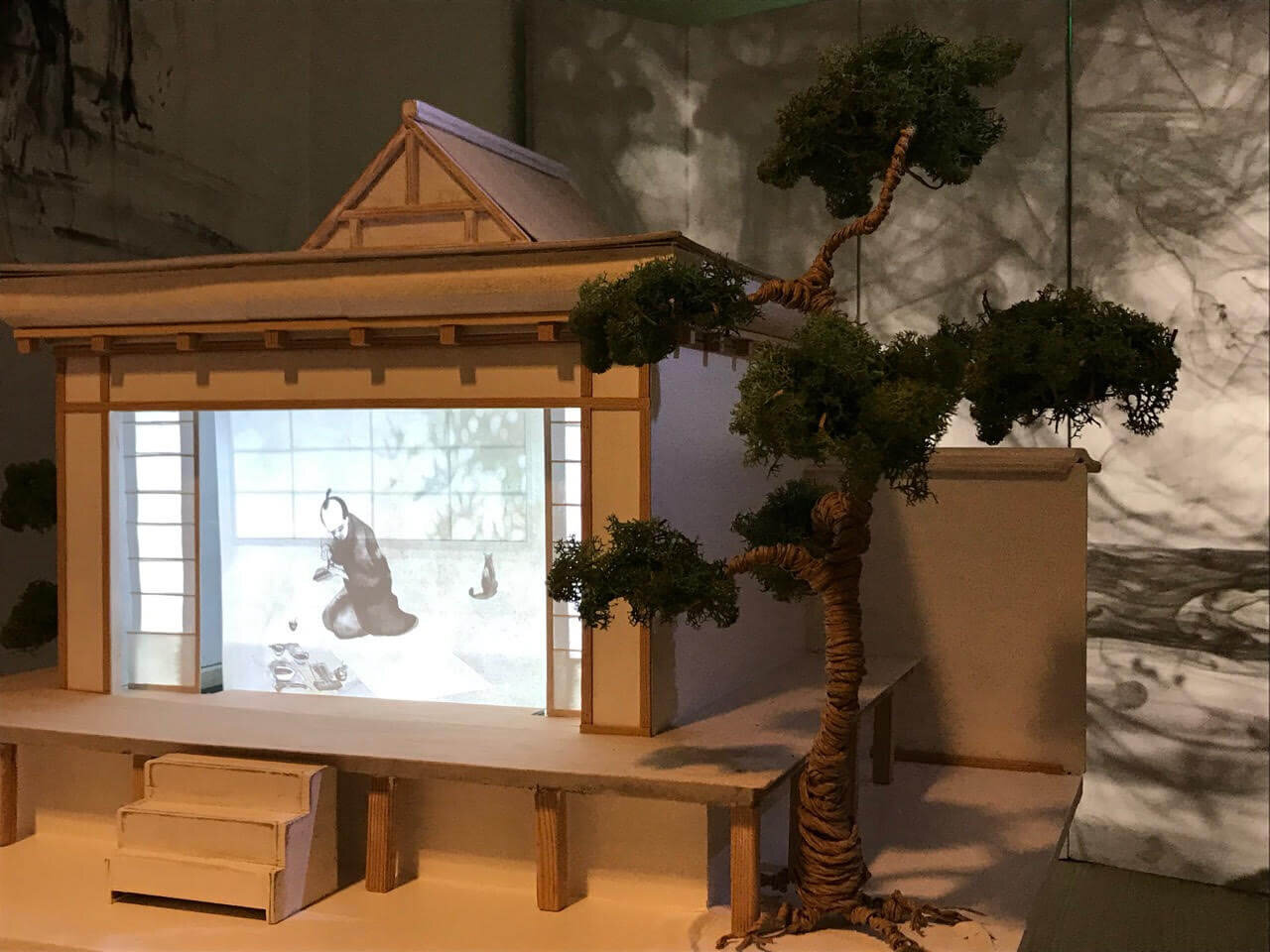
Tamagata Installation for Mayfair Art Weekend, June 2021, designed by Helen Mason
This was June 2021. Buoyed by that success, we extended the film, ran a casting call for actors, commissioned a full orchestral score, and hired a team of digital animators led by the multi-award-winning Natasza Cetner. We also engaged Koshu, a master painter from Japan, to teach us suiboku-ga (ink wash painting).
The mix of traditional painting and new tech caught the attention of the burgeoning digital art scene. We were invited to show in galleries from California to Korea, with massive projections across Paris. We raised funds through NFT sales and kept going: thousands of paintings, painstaking digital work, and experiments with generative AI.
By 2024, we'd finished about half the film and had run out of money. But Ilona and I kept going. In 2025, Responsible AI UK and a consortium of universities offered further funding to use Tamagata as a case study. With that new momentum, we've prepared a special series of artworks for Sedition as we get closer to completing the project.
P: You’ve described Tamagata as a synthesis of everything you care about creatively. What personal, artistic, or philosophical concerns feel most deeply embedded in the work itself?
L:
Above all, it's the story. Written fifty years ago as a critique of Apartheid South Africa and set in Japan around 1600, it's crazy how much it resonates today. For some, it validates an internal fantasy as escape from external trauma. For others, it has helped resolve the pain of not being able to conceive. For me, it speaks to the loneliness and shame of raising a child with very different needs from his peers, needs which meant we avoided others, finding peace only when we locked ourselves away. Tamagata helps me process that. So the story means something.
The project itself is collaborative, an opportunity to work with brilliant creatives, technologists, and academics who push this idea of investigation further than I could alone. For example, when Anna, the composer, broke down the narrative into abstract orchestral emotions, it revealed a completely new interpretation I'd missed: the perspective of Shikishi, Tamagata's wife. By sharing our process through events and workshops, we find even more perspectives and interpretations, which help us test and refine our proposition as we go. It feels like it's forging its own path to where it needs to go.
Creatively, everything has a purpose. The visual style is rooted in the same ink wash painting that Tamagata would have used in 1600. By pairing this with digital techniques, we connect the past with today's aesthetics. AI is used sparingly and specifically to conjure up the unreal and ethereal dreamscapes of the Painted World. Even the script is sparing: a few words at key moments to anchor the story in the emotion of the visuals and music. The only dialogue comes in the hierarchical interactions with the Shogun's emissary: the power of words in one world versus the power of image in another.
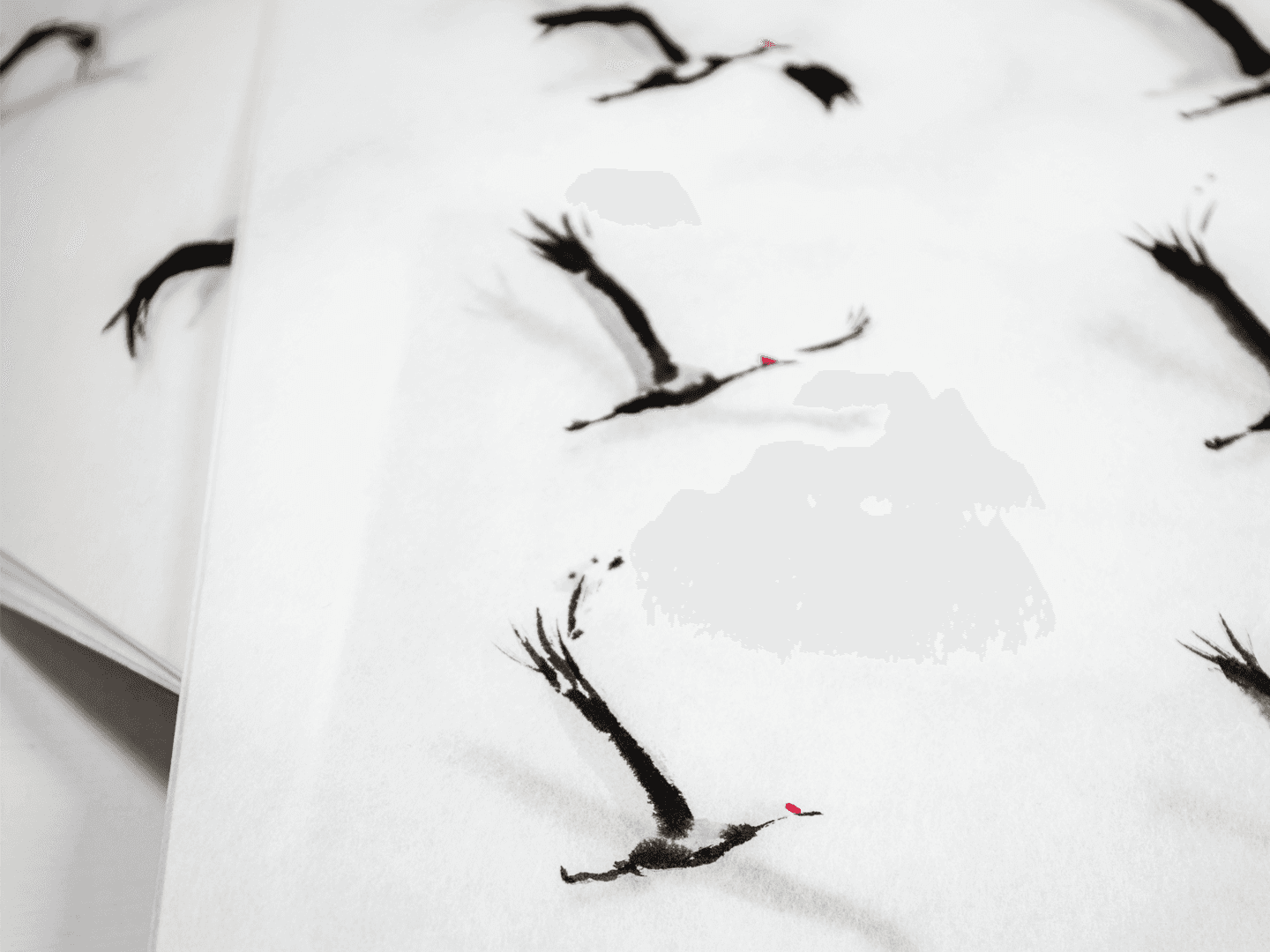
Frame-by-frame ink paintings of cranes in flight by Leo Crane
P: The production process moves from traditional ink wash painting to digital sequencing and generative AI. How does this hybrid methodology mirror the film’s exploration of physical, internal, and imagined worlds?
L:
The creative pipeline was developed specifically to express the three different worlds in the film. The first is the ‘real’ world, a world of hierarchy and duty, where the pressures of a childless marriage weigh heavily on Tamagata and Shikishi. They cannot continue the family line and are unable to fulfill their ultimate duty. To express this world, we started with actors who inhabited the characters and developed a movement language: Natsumi Kuroda as Shikishi, Yojiro Ichikawa as Tamagata and Yuya Sato as the Emissary. We filmed every sequence as reference for frame-by-frame ink painting. Then, by drawing digitally on top of the painted sequences, we are capturing the nuance of expression and gesture (also frame by frame). Finally, these figures are composed into painted environments.
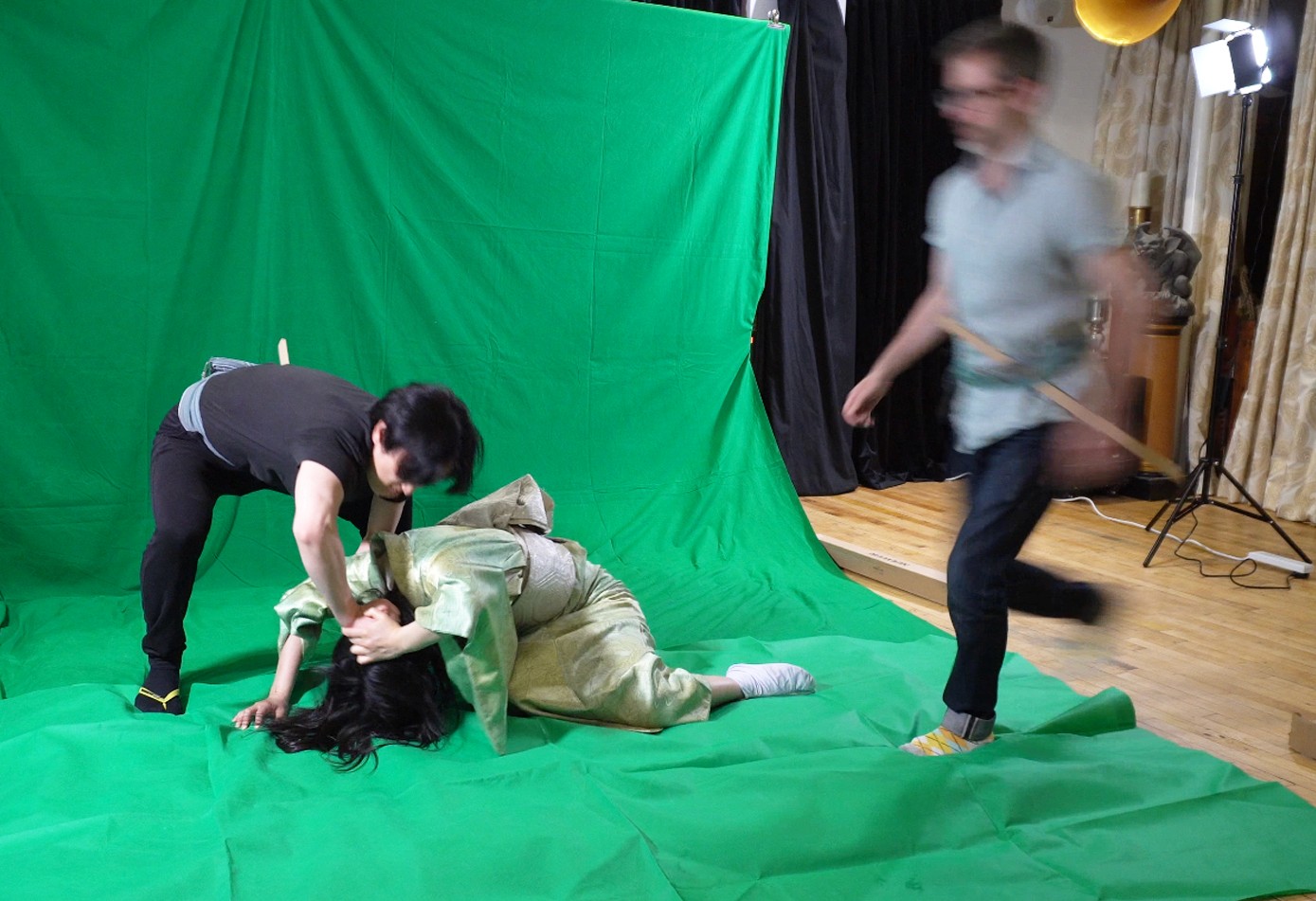
Shooting animation reference with Yuya Sato and Natsumi Kuroda
The second world is a boundless, painted fantasy, where Shikishi and Tamagata re-build their relationship and bring to life their daughter, Hana. We filmed ink dispersing through water to create a sense of the world emerging out of the ink. The figures themselves are fully painted and based on generative AI references, which evokes something off-kilter from the ‘real’ world. Because the paintings move and overlap frame by frame, they are softer and more aligned with the flowing ink around them.
These two worlds represent the tension between duty and love, the former rendered as defined and precise, the latter as an almost ungraspable force. These worlds are framed by a contemporary prologue and epilogue. Filmed in live action, this third world makes a direct connection between Tamagata’s time and our own. The historical distancing serves to highlight the universal relevance of the tale.
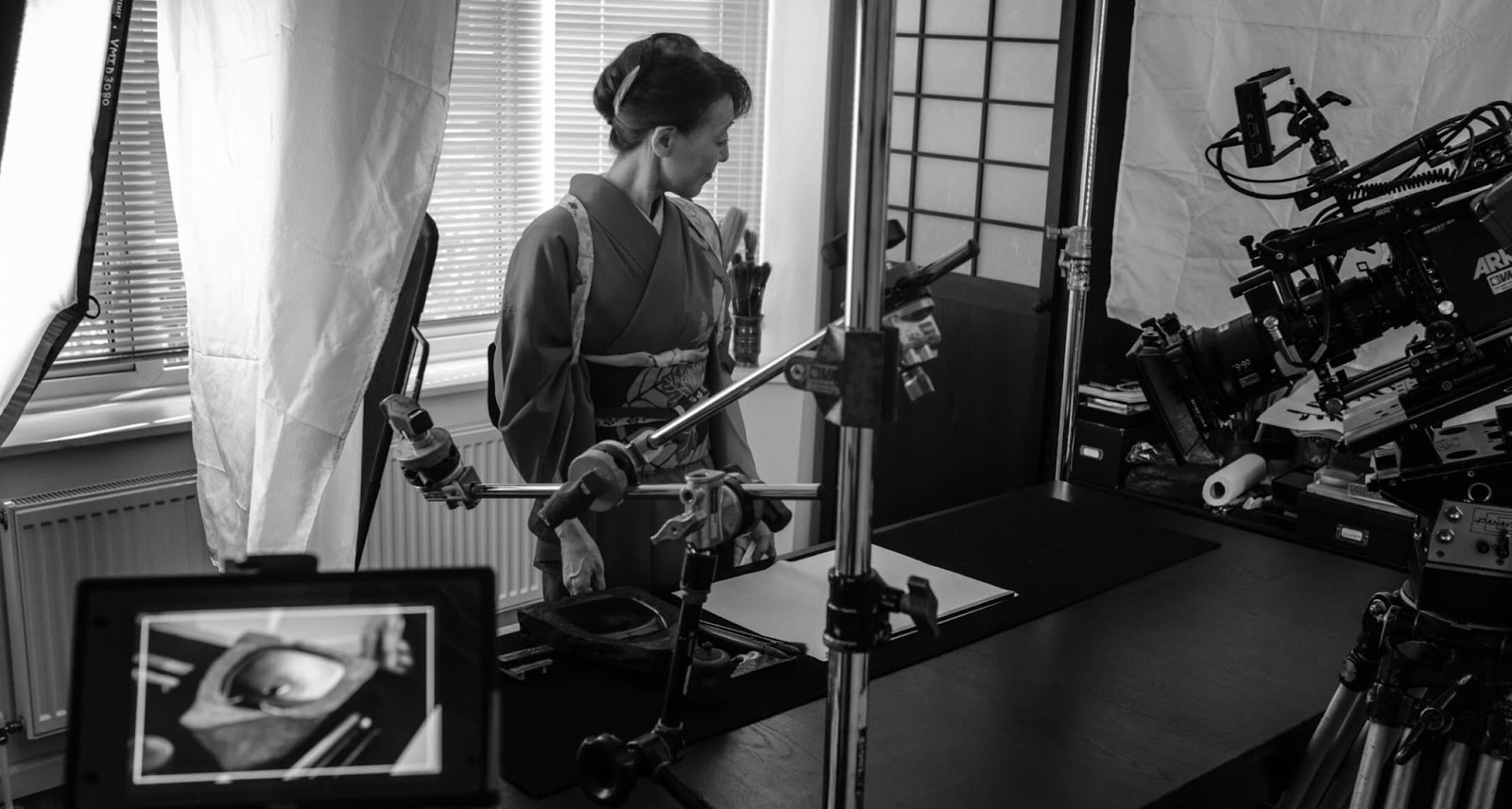
Filming the Prologue with Koshu (photo: G Laszlo)
P:The Painted World plays a central role in the narrative. What does this imagined space represent for you, particularly in relation to agency, intimacy, and resistance to imposed social structures?
L:
The Painted World really is a place of resistance: not loud and angry, but quiet and determined. It is an internal world, untouchable by external forces. In the original story by Betty Misheiker, it was a metaphor against the brutal regime in Apartheid South Africa. Today, as autocratic governments rise up around the world, it has renewed currency as a space to reclaim agency, hope and love.
When we first presented the project in 2021, the outside world was not a safe space. We were between Covid lockdowns and people struggled to find sanctuary. So there was an immediate understanding of this other world. But even then, there were deeper resonances, especially for anyone who has struggled to express their identity in a world which expects you to conform. The Painted World offers creativity as a way to process and confront that part of ourselves, and find connections with other people.
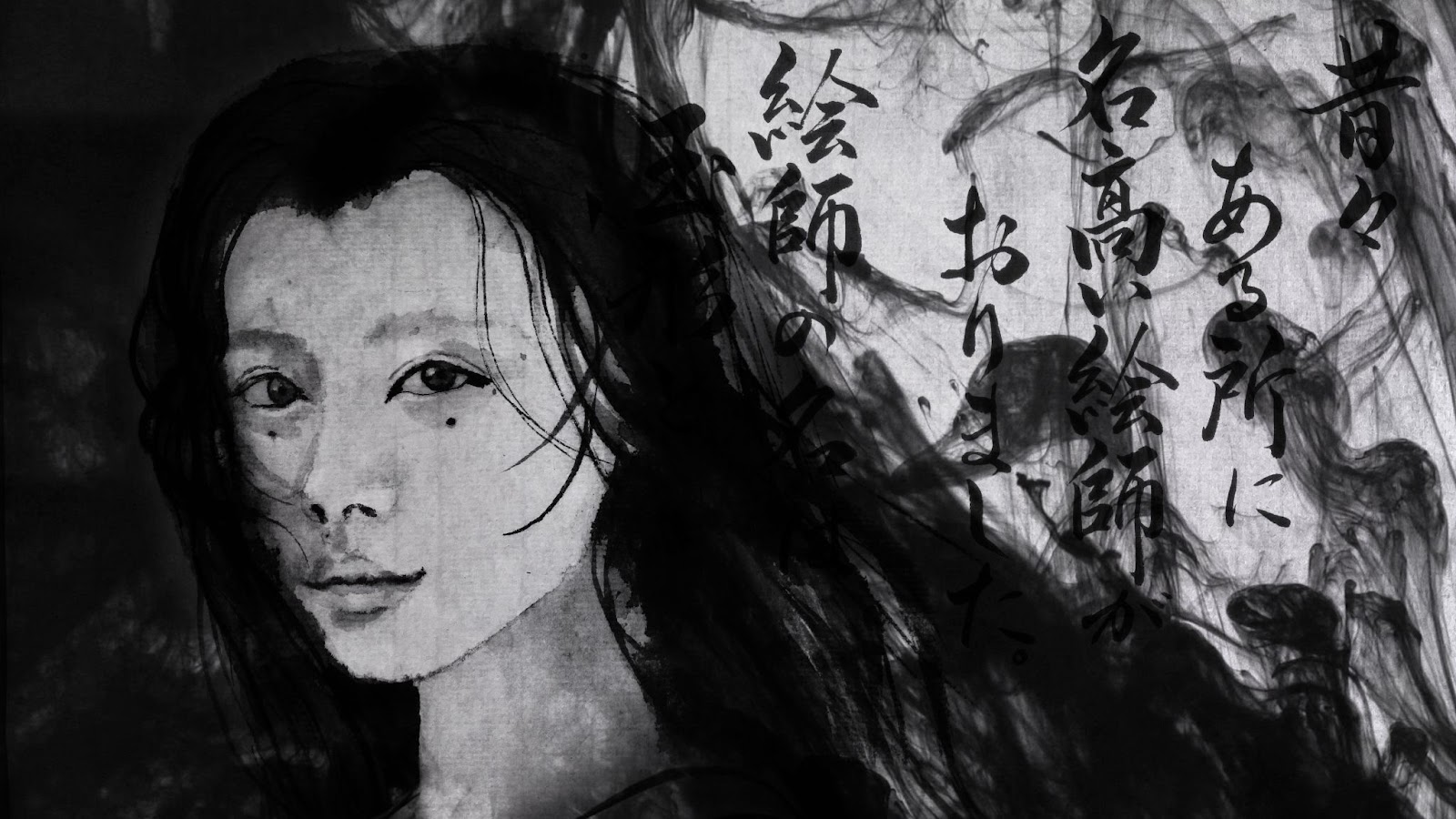
Hana, painted by Ilona Suschitzky with calligraphy by Koshu
P: Tamagata is set in a fictionalised Japan “long ago,” yet it feels deeply contemporary. How do you balance historical inspiration with present-day questions around technology, power, and identity?
L:
When Betty Misheiker wrote the original story, it was a response to the cruelty and injustice she saw in Apartheid South Africa, so it was designed to feel contemporary. Ilona believes the story helped her mother to process a very personal experience. For several years, the Misheikers had secretly sheltered a young boy to prevent him being separated from his mother. It was too dangerous to describe this directly, so she wrote about a far away land, long ago. As an allegory, it transcends time and place to reveal something deeper, something that speaks to common threads of humanity.
Once you dig beneath the hype of any current trend, you can see the same threads. For example, the proliferation of open world gaming speaks to the same concerns as the Painted World. Here, people can build themselves anew, explore identity, challenge societal norms and reconnect with others. You see it when artists use emerging technology to imagine a different kind of future, one where power is decentralised so that individuals can reclaim their agency: the poetry of Sasha Stiles, the art of Rachel MacLean, the films of Ethereal Moon, just to name a few. It’s the same radical reimaginings of the world as Kantor, Bausch, Williams and others that I heard about as a kid growing up in the theatre.
For Tamagata, we had to recreate a consistent world, so that the audience could believe and be completely transported. Although we don’t spell it out, the design and stylistic choices are based on Heian-Kyo (now Kyoto) around 1600. By then, the style has developed from Chinese influences to something distinctly Japanese, but it retains a quiet identity, unlike the flamboyance of later Edo fashions. We felt this allowed the contemporary themes to shine through.
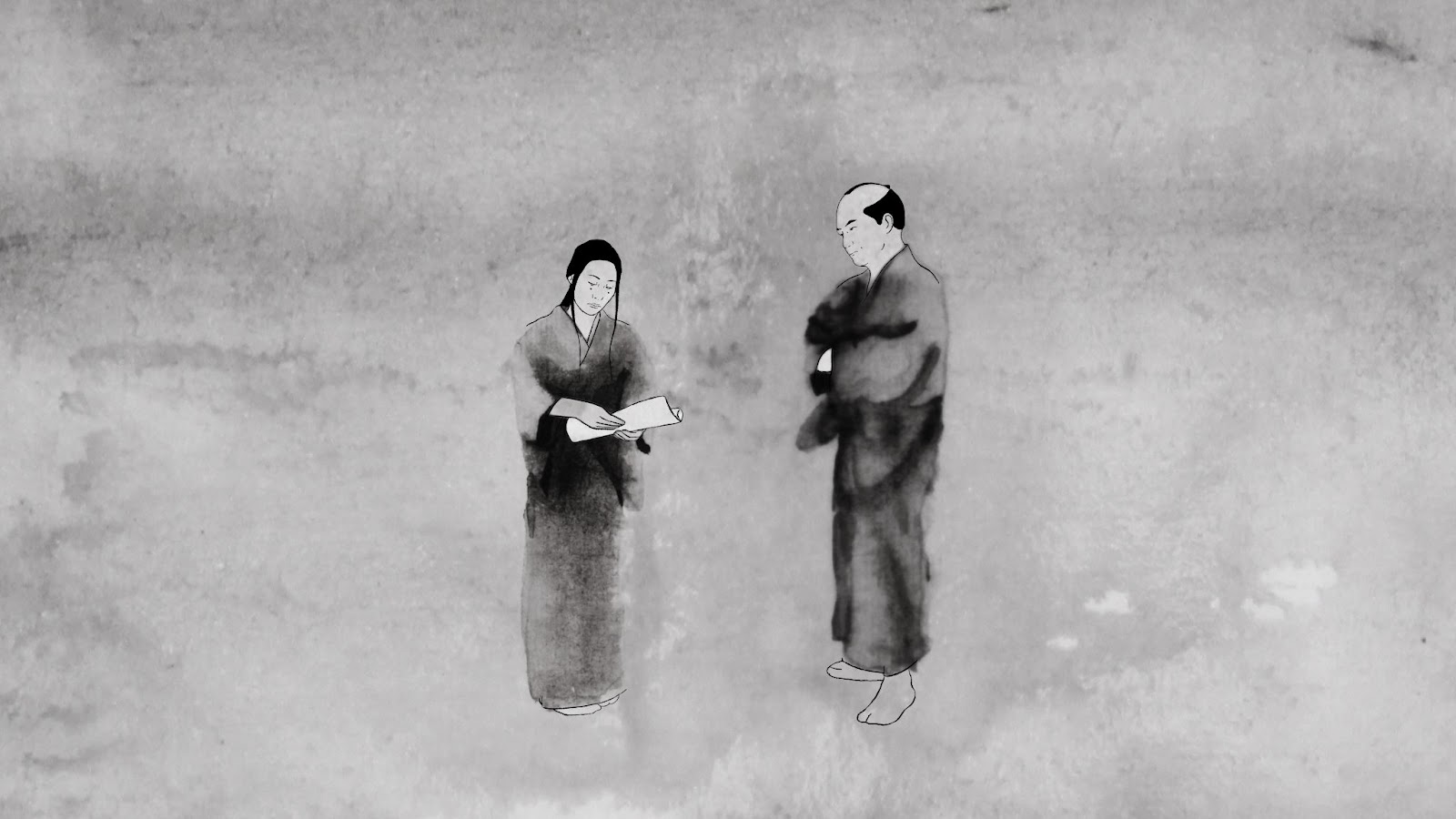
Still from The Masterpiece of Tamagata: Shikishi and Tamagata in the ‘real’ world
P: Through your work with AIFA, and WIRED, education and academic research institutions, you’ve been closely engaged with emerging technologies. How has this ongoing research shaped your thinking about the future of creative practice and storytelling?
L:
I set up AIFA with Clare Maguire because we both believe that technology can decentralise creativity for a more sustainable and equitable future. As artists from different sectors (Clare from music and me from fine art and film), we saw that different creative industries have different business models, and they don't talk to each other. Technology can be the bridge, for example how Sedition has taken a streaming model from music and applied it to fine art. So AIFA has become a think tank and a convening force for a wide range of partners, including WIRED, the UK government, museums, universities and research institutes, as well as investors, start ups and tech giants like Google.
There was genuine hope during the heady NFT days of 2021 and 2022 that blockchain was the solution to decentralisation and artist equity. Of course, it went down a different path with exploitation and manipulation of the market shredding its reputation. But underneath that, the technology remains. Combined with AI, there's an opportunity to re-centre artists not just in storytelling, but in distribution and ownership, like Aria is doing with blockchain-based IP. At AIFA, we have our eye on what’s happening behind the scenes to connect innovators, investors and policy makers, so we can bring about real change.
Although we’re based in the UK, it’s important to keep a global perspective, so we work with initiatives and communities in Nigeria, Senegal, China, Korea, Canada, France, and more. This year, we're focusing on India and the future of film. This global perspective leads to creative thinking and problem-solving that creates something not only profitable, but genuinely exciting.
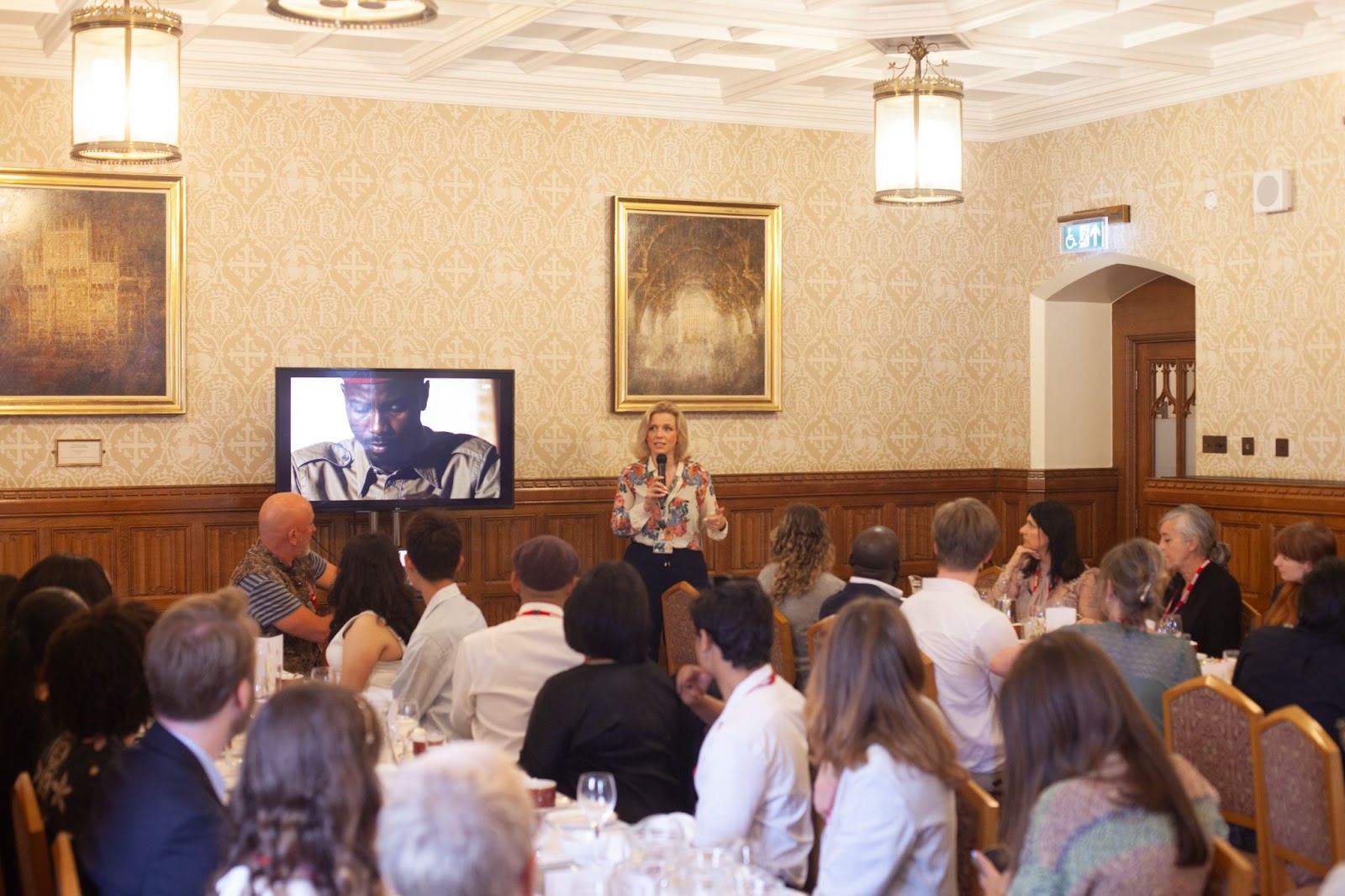
Samantha Niblett MP at the AIFA Awards 2025, House of Lords
P: The project explicitly positions itself as a test case for ethical and responsible uses of AI. What responsibilities do artists have when working with these technologies, and how do you try to model that responsibility through Tamagata?
L:
It’s an interesting question because there’s so much debate about ethics and AI. One of the initiatives researching this is Responsible AI UK, a government-backed innovation programme. They chose Tamagata as a case study specifically because we have a nuanced and pragmatic approach, rather than a polarised, idealistic stance.
We’re not jumping in because AI is the latest trend. In fact, we’ve rejected generative AI for most of the production because it wasn’t right for specific elements. But there are moments where it solves a problem we hadn’t been able to solve any other way, where it produces a visual language that’s relevant to the story and distinct from anything else we might have produced. We’re prioritising ethical platforms like Adobe Firefly, which also protects our ownership of the final product - essential for mainstream distribution deals.
Of course there are very real concerns about datasets, environmental impact, authorship, ownership, deepfakes and so on. On the other hand, AI can open up access for inclusive and diverse storytelling. Last year, we highlighted a number of African creatives, including Hussein Dembel Sow. His synthetic production pipeline is already proving that Senegalese stories can reach international audiences in a way not possible before. The year before saw Ethereal Moon scoop the AIFA Award for Best Film, a female duo who had been locked out of the TV industry after having children. They turned to AI and blockchain to build a successful production company that connects directly with their fans, allowing them to side-step a closed-off industry.
So the pressing ethical concerns that grab the headlines aren't necessarily the same concerns for everyone. Being too idealistic could actually entrench systemic injustices. As long as we hold fast to principles of copyright around fair use and originality, we can distinguish between someone wilfully exploiting another’s work and true innovation. Surely that’s worth celebrating.
P: Tamagata enters the space of digital circulation and platform-based distribution. What excites you about presenting this work through a platform like Sedition, and how do you see digital editions shaping audience engagement?
L:
When we got our Arts Council funding in 2021, we had to present our development work publicly. That set a trend for the entire production. At each stage, we have found ways to share our progress, from open studios and research seminars to exhibitions, digital billboards and work-in-progress screenings. There’s a blog documenting some of this on our website www.figuration.co/tamagata. This is partly our commitment to an open and collaborative process, partly to test our ideas before they are fixed, and partly to build community in advance of the film’s release.
Launching on Sedition takes this to a new level. I’ve been following the platform since its early days. It was the only place you could easily find and collect digital art, including work by some of my favourite artists like Isaac Julien and Tracey Emin. As an animator working with a digital product, this was not only inspiring, but a route to a commercially viable practice. To sit alongside these artists today is an honour. As Sedition has evolved, there are now more opportunities for public engagement through art streaming and through partners like Aria and oOh!media.
Every edition sold contributes to the money needed for the production. While Ilona and I are happy to drive the project forward on passion alone, we need to pay a fair wage to animation assistants, sound designers, post-production, and other specialists. By collecting, you’re helping to realise the final film. That direct connection, where audiences aren’t just passive viewers but active participants in bringing the work into existence, transforms the relationship. It’s a fundamentally different model from traditional film distribution, and one that feels right for how we’ve been making this work all along.
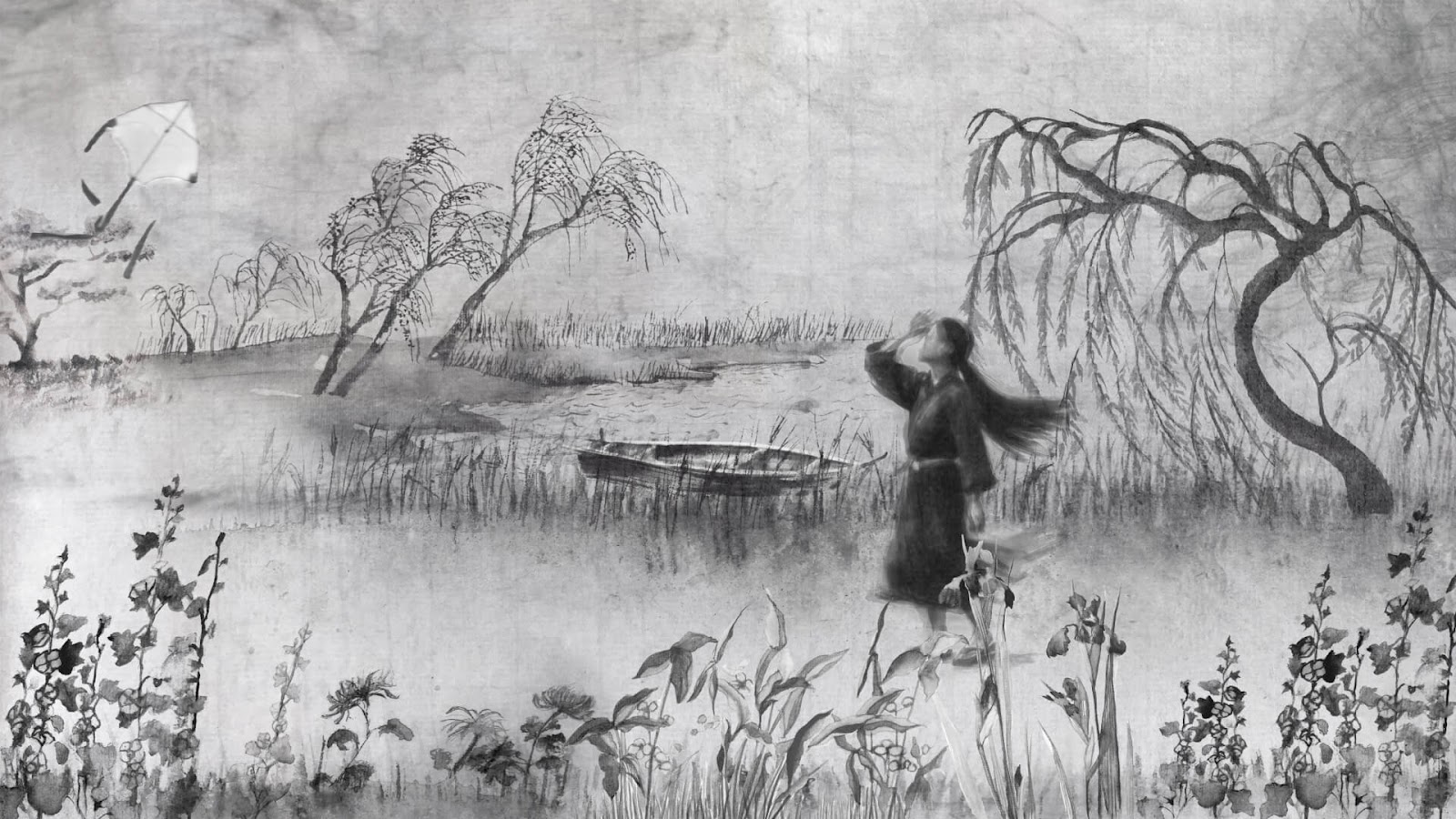
Still from Four Seasons, part of the Tamagata collection on Sedition
P: How are you thinking about authorship, long-term stewardship, and the future life of Tamagata as a work that exists across physical, cinematic, and digital forms?
L:
What's great about stories is that they can have so many different forms, and different people can come in as authors of those forms. The original story was written by Betty Misheiker decades ago. Since then, Ilona Suschitzky has created some beautiful illustrations, and it’s been transformed by Roy Joseph Butler into a film script, as well as an orchestral score by Anna Rice, and of course the animation, which Ilona and I are directing. Everything is held under the production banner of Figuration, my studio, so that we have full rights to distribute it, but there is a precedent for further creative interpretation.
Each of us has authored a response to Misheiker’s original work, and each forms part of the whole. And we can spin off into our own presentations. For example, Anna Rice was commissioned by the RTÉ Concert Orchestra to conduct a six-minute version of the Tamagata Suite for a special radio broadcast. The artworks on Sedition are another way to tell the story through a series of collectible editions.
Beyond that, Ilona and I are interested in exploring how the world of Tamagata can create its own IP. This could open up new platforms and creative outlets to expand that world. I’m interested in what Aria is doing with IP and investment, how to release capital to build those worlds and work with investors to grow the value of that IP in an arena that's maybe outside the film industry or the art world.
There are many opportunities beyond our current scope of thinking that I’d like to lean into as we get closer to completion. The question of long-term stewardship isn’t just about protecting what we’ve made, it’s about creating the conditions for the story to keep growing in ways we haven't imagined yet.
