
About the artist:
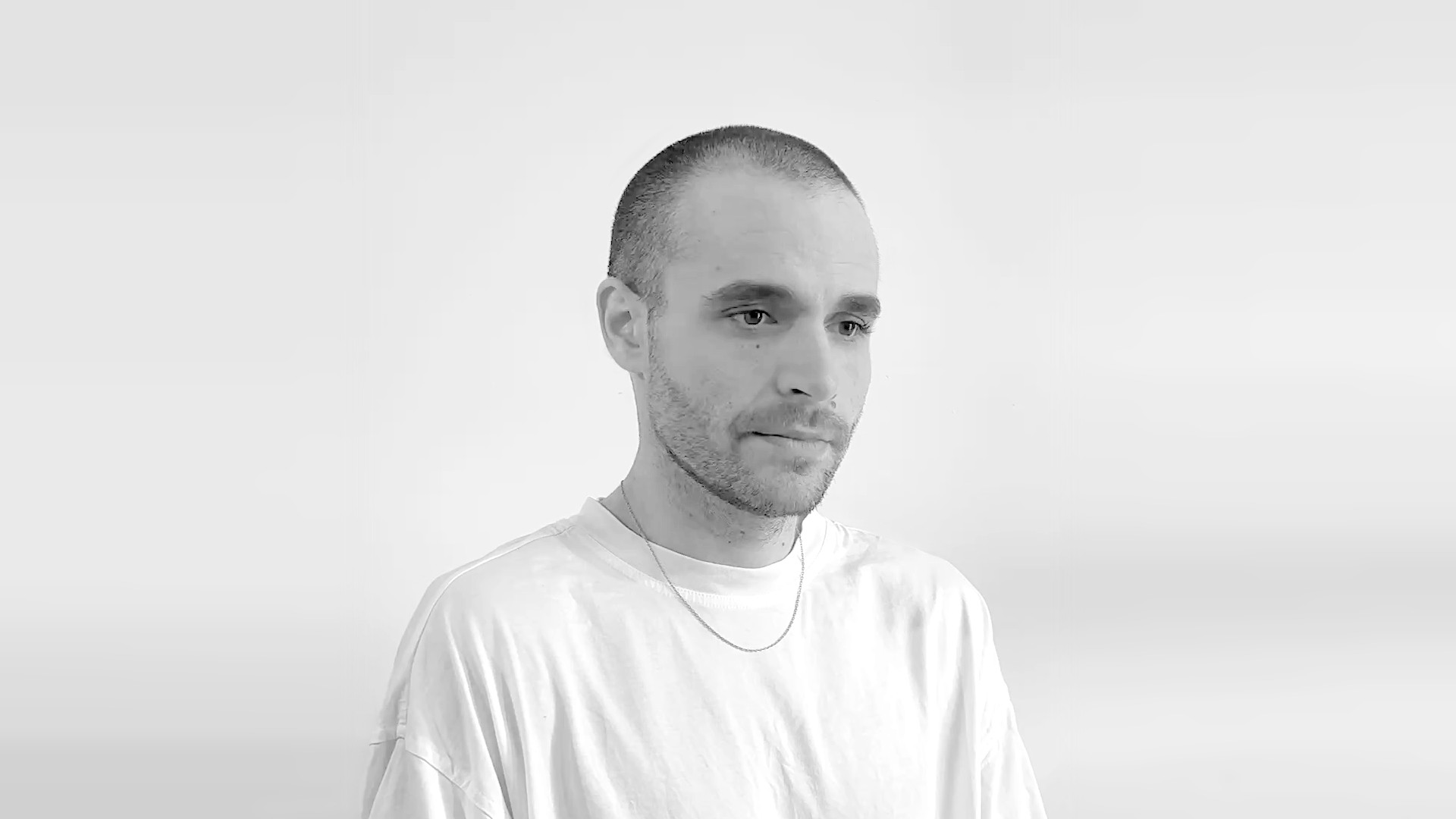
Santiago SARES is a digital artist who bridges past and future through immersive, time-focused experiences. Using a mix of 3D, AI, and generative art, he captures the aesthetics of chaos and transforms the viewer from spectator to witness.
His work explores the precise moment where chaos meets the present—a silent pause between what was and what will be. Drawing on personal emotions and lived experiences, SARES creates immersive environments that invite reflection on the now, while remaining aware of both memory and uncertainty.
By blending classical composition with contemporary abstraction, his procedural works evoke timelessness. The past is represented through historical visual language, while modern techniques anchor the work firmly in the present and future.
With over a decade of experience in art direction, SARES has exhibited internationally—including in New York, South Carolina (Beeple Studios), China, Canada, Italy, the UK, Denmark, and Spain. Each piece carries a challenge: to interpret the digital world, break boundaries, and inspire transformation through emotionally charged narratives that shape the future while reflecting on the past.
The Interview:
Written by Paloma Rodriguez
Paloma: Your work often explores the emotional interiority of the human experience through generative and AI-driven systems. How has your understanding of emotion evolved as your tools have become more computational and data-driven?
Sares: My understanding of emotion has changed through the use of computational tools, becoming more structural rather than cold. Working with information and different models of AI, I have begun to see data as vital records captured in code—the materialization of the intangible, serving as a key element in shaping the formless. Today, information is the most abundant raw material, and my practice uses it as a fundamental input for an operative dialogue that seeks to give form to sensitivity.
In this process, emotion manifests as chaos: a vital, unpredictable, and overflowing force, while technology provides the order capable of shaping that flow. This approach is rooted in a vision where technology is not something alien or external, but an extension of our own capacity to feel and process the world. Generative systems create a space of co-existence: the algorithm acts as a mirror that organizes the complexity of our interiority, allowing me to observe how a feeling can find structure through logical rules without losing its essence.
Far from distancing me from the human, this perspective has sharpened my intuition to recognize moments when the system acquires its own vitality. I have learned that true emotion emerges in the tension of that encounter: where human chaos inhabits the structure of the model until it becomes organic. In this sense, feeling becomes a vehicle: it carries the dialogue between human and machine, allowing the technological architecture to integrate with experience, offering not only a space for reflection but also a new language through which sensitivity can manifest in a shared identity between human and machine.
P: You’ve described emotions as something that can be interpreted or even generated within digital environments. Do you see machine-generated emotion as a simulation of human feeling, or as a fundamentally different form of experience?
S: I believe it goes beyond what would be a simulation, pointing instead to the emergence of a new ontology of experience based on understanding. My practice starts from the traditional concept of emotion, understood solely from the human perspective, in order to shift it and conceive of it as a form of organic energy: chaotic, unstable, and unpredictable. In contrast, the digital environment—the code, the algorithm—operates as a structure of order that allows its analysis, translation, and reorganization.
From this perspective, the machine doesn’t feel—or at least it doesn’t feel in a way we can comprehend. It doesn’t attempt to imitate human emotion either. Therefore, its function isn’t to generate emotions in themselves, but to act as an agent of posthumanist metacognition: a medium that allows us to observe, process, and reconfigure our own sensitivity from another vantage point. Rather than talking about “machine-generated emotion,” I prefer to think of technology as a meeting point between the interior and the exterior, where a new understanding of experience can emerge.
Through what I call Data Poetics, I use affective AI systems, sometimes combined with quantum computing, to process traces of our sensitivity—such as biometric data derived from my own introspective processes—and return them as a form of resonance. That resonance didn’t exist before: it isn’t a direct reflection or an emotional representation, but a processed mirror. A space where the chaos of the human psyche is contained by the order of code.
The result isn’t a simulated human feeling, but the emergence of a distinct experience: a “synthetic emotion.” An aesthetic manifestation that possesses its own coherence and truth, allowing us to inhabit—and think about ourselves—from a non-human perspective.
P: Chaos and structure are recurring forces in your practice. Do you associate chaos more closely with human experience and structure with machine logic—or do you see those boundaries as increasingly blurred?
S: My work seeks to inhabit the boundaries between chaos and structure, rather than dissolve them. My practice emerges from this constant, self-reinforcing duality: the human being, understood through the notion of “being-there” (Dasein), is profoundly paradoxical. At once, humans are the architects of order—creating systems, structures, and algorithms designed to contain entropy—and the source of contingency, ambiguity, and unpredictability. In this sense, humans simultaneously inhabit both chaos and structure.
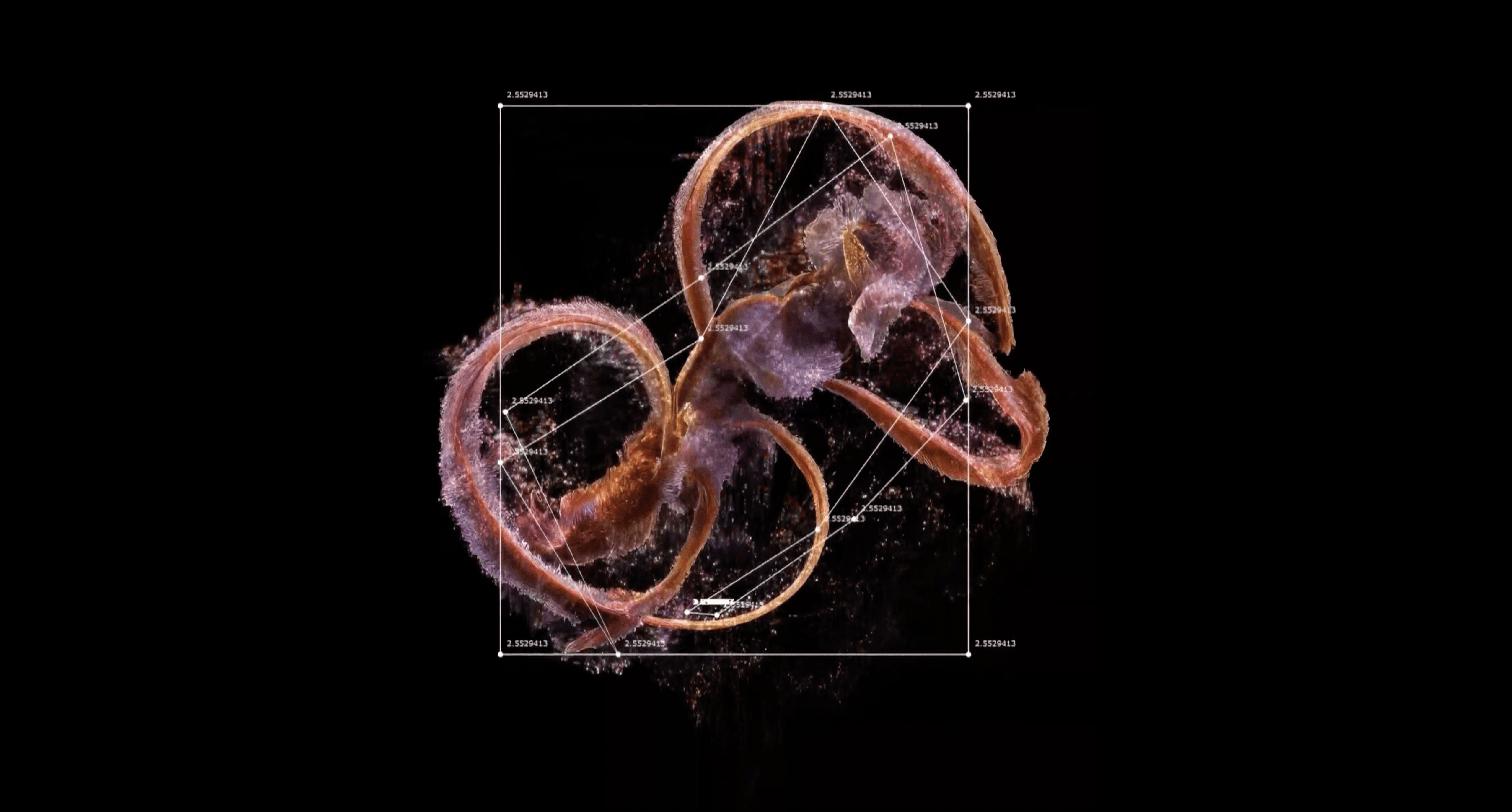
From this perspective, the machine operates more as a recursive mirror than as an autonomous agent. Following the concept of cosmotechnics, technology is understood not as something external to the human, but as a material extension of our ontological complexity. In series such as Origo and Quantia, the digital structure isn't an end in itself, but the stage where the machine’s logical order comes into friction with the inherent instability of human experience.
The role of the viewer is central within this system. They don’t occupy a passive stance, they are an active participant in the process: observing the system while simultaneously being observed by it. The work’s output functions as a device of perceptual reconfiguration, returning to the viewer a processed form of their own relationship with chaos and structure. In this exchange, the aesthetic experience doesn’t close within the work itself, but is completed within the consciousness of the observer.
I see the boundaries between the human and the technological are becoming permeable instead of disappearing, allowing interaction and mutual influence. It’s precisely at this threshold that art emerges: when inorganic order reaches a level of complexity sufficient to manifest its own contingency, and when human chaos seeks a structure that allows it to be observed, translated, or understood. This generates a sustained tension, where technique functions as an act of unveiling being, revealing the nature of the human mind.
P: How do you intentionally reveal the limits of the machine in your work, and why is it important for you that the human presence is still felt in a work?
S: I approach the exposure of a system’s limits as a deliberate methodological choice. Error functions as an operational mechanism that reveals the materiality of the machine and deconstructs the anthropomorphization projected onto it. By pushing algorithms into states of instability through real-world, contingent data—biometric, affective, temporal—the system is compelled to operate beyond its zones of optimization. In doing so, technology ceases to act as a transparent infrastructure and begins to display its own constraints, biases, and emergent behaviors.
The “errors” generated by artificial intelligence hold a particular fascination for me, representing a form of operational freedom. When a model produces outputs outside its expected optimization space, what arises isn't randomness but a process of system individuation: a shift from statistically predictable execution to a singular, dynamic behavior. At this stage, the machine transcends its role as a mere instrument, revealing quasi-organic properties capable of producing alternative configurations.
Human intervention plays a crucial role in this process. The relationship between human and machine forms a coupled system, in which human presence introduces contingency, temporality, and finitude into the technical circuit. This interaction imbues the work with its “soul,” preventing it from collapsing into a self-contained, statistically consistent calculation devoid of experiential resonance. Through this coupling, the system evolves while simultaneously generating outcomes that reflect the dynamic interplay between human agency and digital autonomy, exposing the contingency and uniqueness inherent to the process.
The purpose of my practice isn't to generate images or optimized outputs, but to establish conditions in which the system’s behavior at the limits becomes visible. By embedding error, indeterminacy, and human trace within the algorithmic architecture, technology transforms into an operational extension of human complexity. The resulting output serves as a record of the process—a transient state in which code, data, and human presence converge. In this framework, computational order and experiential contingency operate according to a unified logic of meaning production.
P: Many of your pieces transform the viewer from a passive observer into an active participant. What role does agency both human and machine play in your creative decisions today?
S: I understand agency as a relational and dynamic phenomenon rather than control over a passive medium. In this framework, technology becomes an autonomous system with its own logic, internal dynamics, and capacity to respond. Human and technological agency exist in a reciprocal coupling: my creative decisions guide and modulate the system’s emergent behaviors, while the algorithm operates with degrees of autonomy that produce outcomes I cannot fully predict.
This negotiation of agencies introduces error and contingency as fundamental operational variables. A fully optimized system would remain closed and deterministic, but allowing the machine autonomy generates points of tension—deviations from expected behavior that reveal the system’s materiality and internal constraints. Within this context, error functions not as a failure, but as evidence of technological agency: moments when the system responds and manifests its own properties.
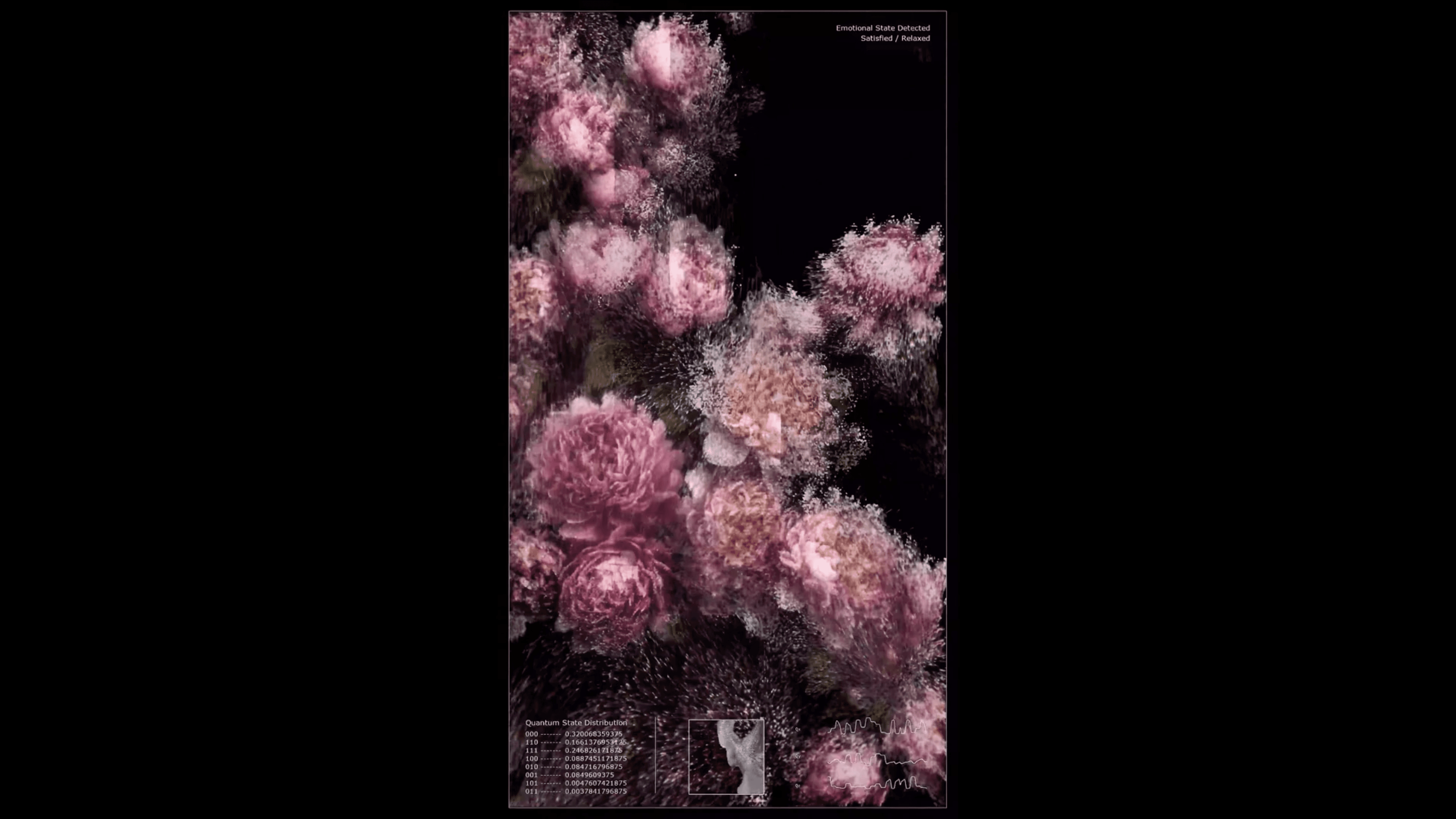
The process reaches its full potential when the viewer participates actively. The work is conceived as an open system whose activation depends on external interaction—whether passive or active, it remains inherently participatory—integrating three forms of agency: the creator’s intention, the algorithm’s operational autonomy, and the observer’s interpretation, which evolves alongside the system’s output. The objective is to establish a dynamic equilibrium in which technological precision and human contingency converge within a coupled system. In this way, the work functions as an operational record of distributed identity, where human and technological agency coexist and mutually recognize each other in the production of meaning.
P: In a world increasingly shaped by algorithmic decision-making, how can art in your opinion help preserve emotional ambiguity, uncertainty, and even introspection within the human experience? Or how do you hope to evoke these emotions and explore these concepts within your work?
S: In an environment increasingly mediated by algorithmic decisions aimed at maximizing efficiency and reducing uncertainty, art creates a space where certainty transforms into exploration, preserving human ambiguity and introspection. While technological logic tends to produce definitive outcomes, our emotions and reflections remain inherently complex and unpredictable. This tension becomes the driving axis of the practice: the system’s structure isn't conceived as a solution, but as a medium for generating open-ended experiences, where introspection, doubt, and emotion shape meaningful objects for the observer.
I work with digital systems capable of autonomously processing and reorganizing information, conceived as inorganic agents actively participating in the construction of experience from their analytical perspective. Meanwhile, my organic sensibility couples with these systems in a feedback loop: the machine organizes and reconfigures the chaos of emotion, while my intervention modulates and shapes order, producing unpredictable shifts that cannot be reduced to a single outcome.
In this way, the work becomes a space where ambiguity and uncertainty aren't only acknowledged but become active elements of the experience. The interaction between human sensibility and system autonomy generates a relationship in which interpretation remains open and dynamic. Within this framework, art acts as a mediator, allowing viewers to recognize and explore their own emotions and introspective processes, maintaining the complexity of human experience in contrast to the uniformity proposed by algorithms.
P: In the future, what do you think will be more important? Do you think some future artists will be remembered more for the systems they designed rather than the individual outputs those systems generate?
S: We are experiencing a paradigm shift in which the axis of relevance is moving: artistic expression is transitioning from a fixed state to one in motion, from the purely contemplative to the participatory. Everything depends on the role we choose to assign to the viewer and on the essence of the message we aim to convey, and this is where intuition plays a central role. Intuition acts as the necessary counterbalance to prevent the system from becoming an alienating structure. It guides us in knowing when to let error breathe and when to impose order; it is the compass that allows us to find the exact balance where the coldness of logic meets human warmth.
Today, creating systems enables a depth that goes beyond the visual result alone, as we inhabit a world in constant flux. By focusing on systems rather than outcomes, value no longer resides in the final object but in the architecture of relationships that the system proposes. In this context of accelerated technological evolution, the system becomes a reflection of how we communicate and contemplate reality today. This is why viewing technology as a bridge rather than an end in itself is central to my practice. The output, the final image, is merely a momentary capture—a record of a balance occurring in real time. What truly endures is the architecture of rules, freedoms, and contingencies embedded within the software.
Designing a system is, in essence, creating a dynamic dialogue. It allows human error, intuition, and contingency to manifest in unexpected ways, revealing behaviors that cannot be fully anticipated or controlled. I believe the true value lies in the ability to generate a digital environment that can ‘breathe,’ evolving and reconfiguring in interaction with the viewer. In doing so, the system becomes a testament to our identity: a structure that transcends the artist, capable of sustaining its own logic and sensibility, extending the experience beyond its original creator.
P: As an artist working with AI and generative systems, what does IP ownership mean to you today? What challenges or opportunities do you find most interesting with regards to how it's shared, experienced, or even collected?
S: For me, intellectual property in the context of the technological evolution we are experiencing—marked by the convergence of AI, blockchain, and generative systems—is undergoing a structural transformation. By understanding technology not as a tool for execution but as an agent with which an operational dialogue is established, authorship ceases to be conceived as absolute control over a final result and is instead understood as the conception and recording of an evolving process that gives rise to the work.
In this framework, blockchain plays a fundamental role as an infrastructure for provenance and memory: it allows the work to be inscribed as a historical sequence of states and decisions, rather than as a fixed, closed object. This sustains the possibility of multiple reproducibility without losing traceability, shifting the notion of ownership from the isolated output to the design of the conceptual and operational framework that enables the system’s evolution.
In my view, the most significant challenge and opportunity lie in the ability to construct a historical and evolutionary record of digital culture, where a work can remain open, mutable, and generative, while a certified record preserves its genealogy, coherence, and continuity over time, as well as its authorship. In this context, intellectual property no longer functions as a barrier to access but operates as a guarantee of recognition for the process: that trajectory of transformation where human intention and technological autonomy converge.
P: How does the idea of persistent attribution and traceable lineage resonate with you, especially given how often digital work is shared today in an ever evolving digital landscape?
S: Persistent attribution and traceable lineage are essential in a digital ecosystem defined by constant circulation, mutation, and decontextualization of content. I see traceability as an infrastructure of identity: it allows a work to retain its coherence and history even as it expands, is shared, and transforms across multiple contexts, while preserving authorship.
In this landscape of continuous reproducibility, lineage goes beyond establishing ownership—it provides a deeper understanding of the work’s trajectory: where it originates, how it evolves, and which relationships it activates over time. It is a way of inscribing memory within the digital flow, preventing pieces from dissolving into anonymous, fragmented circulation, enabling widespread reproduction, and allowing the work to reach more people while maintaining the necessary records.
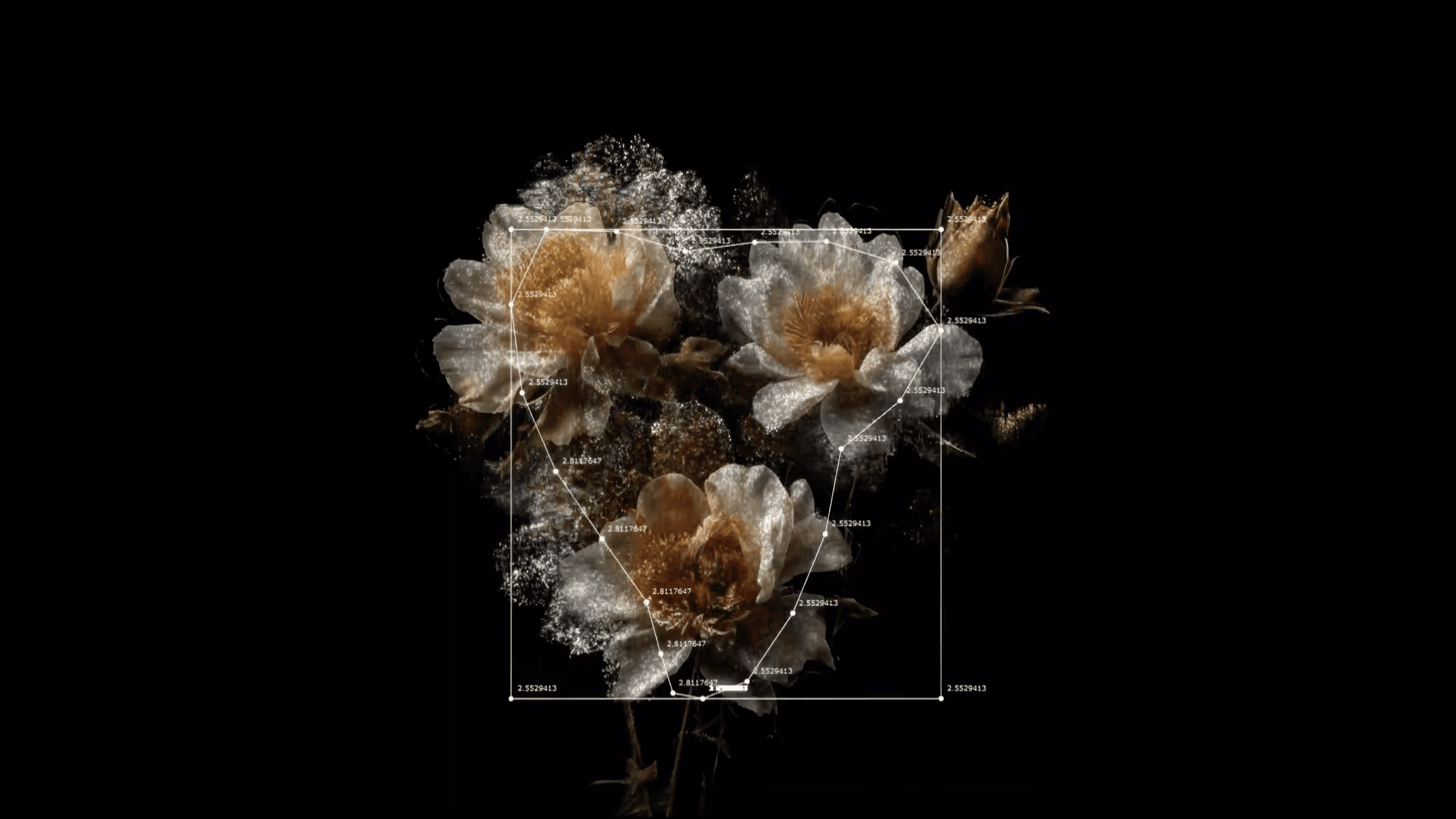
This is particularly relevant in generative art, where systems produce variations and constantly changing states. Having a persistent record allows this evolution to be documented without limiting it. The work is not fixed, yet it doesn’t lose its origin. In this sense, persistent attribution doesn’t immobilize the experience; it sustains a framework of continuity that keeps the artist’s intention and the system’s autonomy connected, even within a digital environment in perpetual transformation.
P: If you imagine your work living on-chain 10 or 20 years from now, what do you hope remains intact and what do you hope continues to change?
S: It’s something I think about often, as part of my long-term vision is to create a living record of the human mind. I hope that the concept and original framework of the work, along with the record of its lineage, remain intact. By framework, I mean the relational structure—the rules and connections that shape how the artist, the machine, and the viewer interact within the system, and how that interaction generates meaning. Keeping this structure legible and updatable allows anyone engaging with the work to perceive the balance between my intention and the machine’s autonomy. What must endure is the memory of the process—the guarantee of identity that ensures the work remains a faithful record of a specific human-technical dialogue, no matter how much technology evolves.
At the same time, I hope the work continues to transform: its visual manifestations, interactions, and emergent behaviors evolving over time. The systems I design are conceived as living organisms; I’m excited by the idea that the work can adapt to new environments, interfaces, and computational capacities we can’t yet imagine, and that it can be reinterpreted by new generations of viewers, always operating within the rules and freedoms that shaped its origin.
In short, I want the work to retain its technical soul, structure, purpose, and identity while evolving organically. Twenty years from now, I hope it will be seen as a persistent system that generates questions, creates spaces for introspection, and keeps human sensitivity alive in an ever-changing technological landscape. Above all, I hope it continues to be questioned, as new interpretations will naturally emerge from that process.
